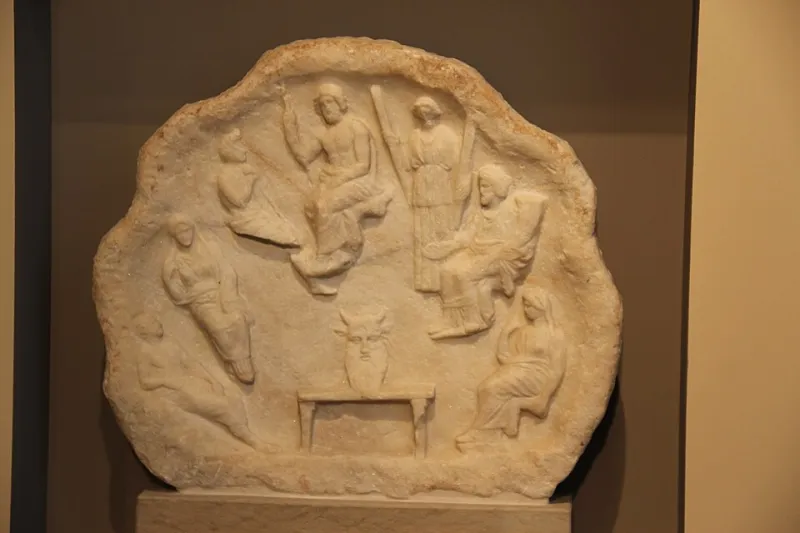
Debt Is Older Than the Wheel. Stop Acting Surprised When It Breaks Things.
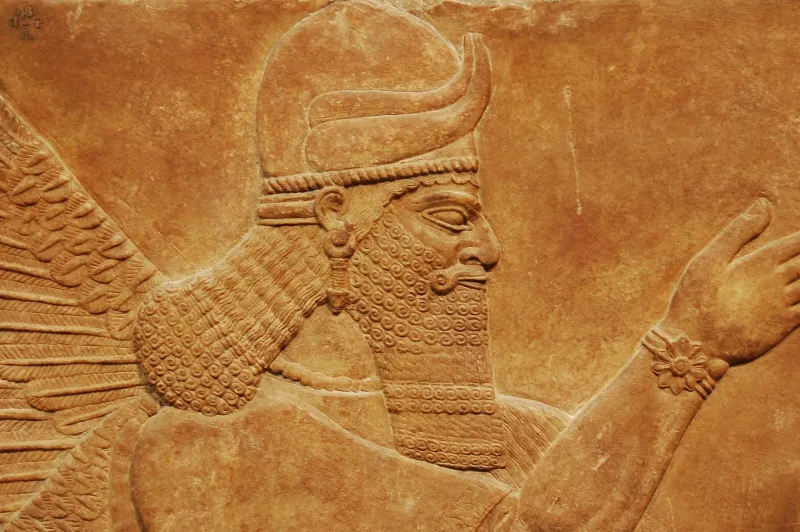
Every financial crisis arrives wearing a costume of novelty. The instruments are new. The terminology is new. The specific mechanism by which everything falls apart contains at least one element that the post-mortems will describe as "unprecedented." And every time, somewhere in a university archive, there's a historian quietly pointing out that this has happened before. Many times. In some cases, literally thousands of years before.
Human psychology hasn't changed. The way we extend credit, accumulate leverage, convince ourselves that this cycle is different, and then experience collective shock when it isn't — that's not a feature of modern finance. That's a feature of being human. The Sumerians figured this out the hard way around 3000 BCE, and we've been re-learning it ever since.
The First Debt Crisis Was in Mesopotamia
The earliest written financial records we have are clay tablets from ancient Mesopotamia, and a significant portion of them are debt records. Loans of grain and silver. Interest obligations. Repayment schedules. The Sumerians didn't invent debt because they were unusually clever or unusually greedy. They invented it because credit is a natural solution to the timing problem that agriculture creates: you need inputs now, you won't have outputs until harvest, and the gap between those two moments has to be bridged somehow.
The interest rates on Sumerian loans were high — often around 20 percent per year for grain, 33 percent in some records. When harvests failed, borrowers couldn't repay. When they couldn't repay, lenders seized collateral — land, livestock, family members sold into debt slavery. Debt accumulated across bad years faster than it could be discharged in good ones. By the early Bronze Age, Mesopotamian city-states were regularly experiencing what we would now call debt crises: widespread insolvency, concentration of land in the hands of creditors, and a population of free farmers who had worked themselves into bondage.
The solution that Mesopotamian rulers developed was the jubilee — a periodic royal decree canceling private debts, freeing debt slaves, and restoring land to its original owners. This wasn't charity. It was a political technology for resetting a system that had wound itself too tight. Without the jubilee, the math eventually produced an outcome that was bad for everyone, including the creditors, because a population of debt slaves doesn't generate the economic activity or the military manpower that an empire requires.
The jubilee worked. It also had to keep being done, which tells you something about whether it solved the underlying problem.
The Cycle Has a Shape
If you read enough economic history, a pattern emerges that is almost tediously consistent. It goes roughly like this:
Credit expands during periods of stability and growth. Expanding credit funds productive activity, which produces real returns, which validates the expansion. Lenders become confident. Terms loosen. Borrowers take on more leverage because the returns seem to justify it. Asset prices rise because credit-fueled demand is chasing a fixed supply of productive assets. The rising asset prices make the leverage look safe because the collateral is appreciating.
Then something changes. A harvest fails. A trade route closes. A currency gets debased. The specific trigger varies. What doesn't vary is the next step: the collateral is worth less than the debt it's securing, the borrowers can't service their obligations, and the creditors discover simultaneously that the assets underpinning their claims are not worth what they thought.
This is the margin call. And it has been happening, in recognizable form, since Mesopotamia.
Rome Ran This Playbook Repeatedly
The Roman Republic experienced multiple debt crises severe enough to threaten social stability. The Conflict of the Orders — the prolonged political struggle between patricians and plebeians that shaped the early Republic — had significant debt dynamics underneath it. Plebeian farmers who went into debt to patrician creditors and couldn't repay faced a system called nexum, which allowed creditors to claim the person of the debtor. This was Mesopotamian debt bondage with a Roman accent.
The Roman response followed the Mesopotamian pattern: periodic debt relief legislation, interest rate caps, and eventually the abolition of debt bondage. None of these measures stopped the cycle. The Roman economy continued to produce debt crises at regular intervals throughout the Republic and into the Empire. By the third century CE, the imperial government was managing a currency crisis caused by decades of debasement — reducing the silver content of coins to fund expenditures the tax base couldn't cover — that produced inflation, economic disruption, and political instability on a scale that contributed to the crisis of the third century.
Debasement is, functionally, a hidden tax on savings. It transfers wealth from creditors to debtors, which is why governments under fiscal pressure keep doing it. It also destroys the credibility of the currency, which is why it tends to end badly. The Romans knew this. They did it anyway, because the short-term political math was more compelling than the long-term economic math. This should sound familiar.
Medieval Europe Reinvented the Same Problems
Medieval European economies developed sophisticated credit systems — the Medici bank, letters of credit, bills of exchange — that allowed capital to flow across the continent in ways that looked genuinely new. And in terms of specific instruments, they were new. In terms of underlying dynamics, they were Mesopotamia with better accounting.
The financial crises of the fourteenth century, triggered in part by the defaults of Edward III of England on loans from Florentine banking houses, produced a cascade of bank failures that wiped out fortunes and destabilized economies across Europe. The Bardi and Peruzzi families — who had been among the most powerful financial institutions in the world — were effectively destroyed. The mechanism was leverage. The trigger was a sovereign default. The aftermath was credit contraction, economic depression, and a period of retrenchment that looks, in the data, remarkably like the aftermath of 2008.
2008 Was a Jubilee We Didn't Call a Jubilee
The 2008 financial crisis had genuinely novel elements. The specific instruments — collateralized debt obligations, credit default swaps, the particular structure of mortgage securitization — were products of late twentieth-century financial engineering. The underlying dynamic was not novel at all.
Credit had expanded. Terms had loosened. Asset prices had risen in ways that made leverage look safe. The collateral turned out to be worth less than advertised. The margin call arrived. The system required a reset.
The reset that happened — emergency lending facilities, bank bailouts, quantitative easing, effectively zero interest rates for years — was a jubilee by another name. It transferred losses from the financial system to the public balance sheet, reflated asset prices, and prevented the full liquidation that a pure market outcome would have required. Whether it was the right policy is a separate argument. What it was, structurally, was a debt reset of the type that Mesopotamian rulers had been ordering for three thousand years.
The Sumerians would have recognized it immediately. They'd have been surprised we were so surprised.
The Part You Can Use
None of this means that financial crises are inevitable on any specific schedule, or that leverage is always bad, or that credit is a trap. Credit is, as the Sumerians discovered, a genuinely useful technology. The problem isn't credit. The problem is the part of human psychology that, during the expansion phase of every cycle, becomes convinced that the expansion is structural rather than cyclical.
The historical record is consistent on this point: the expansion is always cyclical. The specific timing is unpredictable. The shape of the cycle is not.
Five thousand years of data. It's there. You could read it.