Rhetoric School Dropout: How Athens Invented the Disinformation Toolkit and Never Looked Back
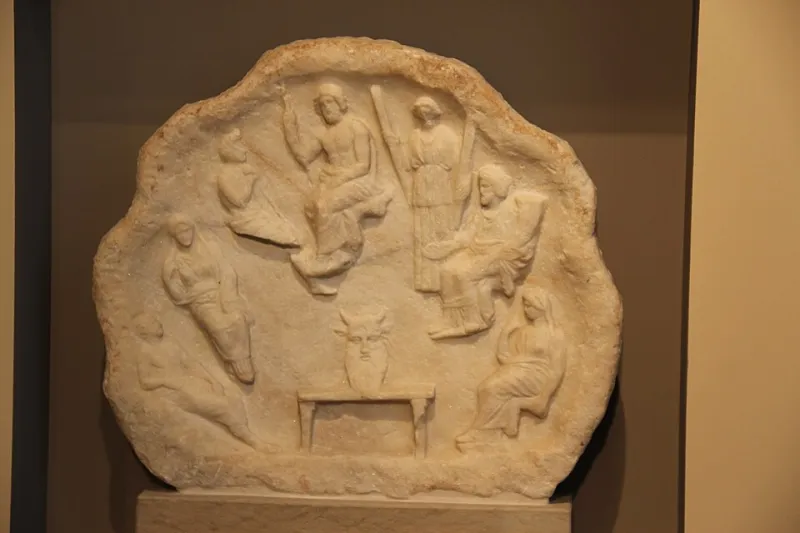
Photo: Gary Todd from Xinzheng, China, CC0, via Wikimedia Commons
Every few years, someone publishes a piece arguing that social media has created a fundamentally new kind of misinformation problem — one that human psychology isn't equipped to handle, one that requires technological solutions, algorithmic intervention, platform-level responsibility. The argument is always urgent and usually sincere.
It is also, historically speaking, not even a little bit right.
The techniques being deployed in your social media feed right now — the witness discrediting, the noise flooding, the reframing of factual questions as matters of perspective, the strategic use of emotional language to short-circuit analytical thinking — were documented, systematized, and sold as a professional service in Athens around 450 BC. This isn't a technology problem. It's a human performance problem that we have never solved, and probably can't solve, because the people running the performance are very good at what they do and have had two and a half millennia of practice.
Meet the Original Content Farms
The Sophists were, depending on your sympathies, either the world's first professional communications consultants or the world's first professional liars. Probably both.
They emerged in Athens during the fifth century BC to fill a specific market need: the Athenian democracy required citizens to argue their own cases in court and make their own speeches in the assembly. There were no lawyers in the modern sense. If you needed to persuade a jury of 500 people that you hadn't committed fraud, you needed to be able to stand up and talk. If you couldn't do that naturally, you could hire a Sophist to teach you how.
The better Sophists — Protagoras, Gorgias, Thrasymachus — were genuinely brilliant. They weren't just teaching people to be louder or more confident. They were developing a systematic analysis of how persuasion actually works, what makes claims feel credible, and how to construct arguments that land regardless of whether they're true.
That last part is the key. The Sophists explicitly taught that the goal of rhetoric was persuasion, not truth. Protagoras famously argued that there are two sides to every argument and a skilled rhetorician can make either one prevail. This wasn't a bug in the system. It was the product.
The Five-Part Toolkit
Sophistical rhetoric wasn't vague — it was a teachable method with identifiable components. Understanding those components makes them recognizable when they show up in a Senate hearing, a cable news segment, or a viral thread.
Witness flooding. When inconvenient testimony exists, don't refute it — drown it. Introduce so many alternative witnesses, so many competing accounts, that the jury (or the audience) loses confidence in any single source. Gorgias was particularly skilled at this. The goal isn't to prove the inconvenient witness wrong. The goal is to make the concept of reliable testimony seem naive.
Emotional displacement. Shift the emotional register of the debate before engaging with the facts. A question about financial fraud becomes a question about whether the accuser respects hardworking citizens. A policy disagreement becomes evidence of bad character. The Sophists understood that once an audience is emotionally activated, analytical evaluation of evidence drops sharply. This is not a social media discovery. It's a 2,500-year-old technique.
Definitional warfare. Control the vocabulary of the argument and you largely control the outcome. The Sophists taught students to challenge definitions before engaging with substance — forcing opponents to defend their terminology rather than their position. Sound familiar? It should. Every modern political debate about what counts as "inflation," "recession," "violent crime," or "poverty" is definitional warfare operating on the same logic.
False equivalence construction. Present two non-equivalent things as equivalent to create the appearance of a genuine controversy where none exists. Protagoras built this into the core of his teaching: antilogiai, or counter-arguments, could be constructed for any position. The existence of a counter-argument was presented as evidence that the original claim was uncertain. This is the "some people say" construction. It is very old.
Speaker discrediting. Attack the credibility of the source rather than the content of the claim. The Sophists developed extensive techniques for this, including questioning a speaker's motivations, their social standing, their past statements, and their personal character. The goal is to make the audience evaluate the messenger rather than the message — because messengers are always easier to discredit than well-documented facts.
How the Toolkit Traveled
The Sophists eventually lost the cultural argument in Athens — Plato spent several dialogues methodically dismantling their claims, and "sophistry" became a pejorative. But losing the philosophical debate didn't kill the practice. It just moved it.
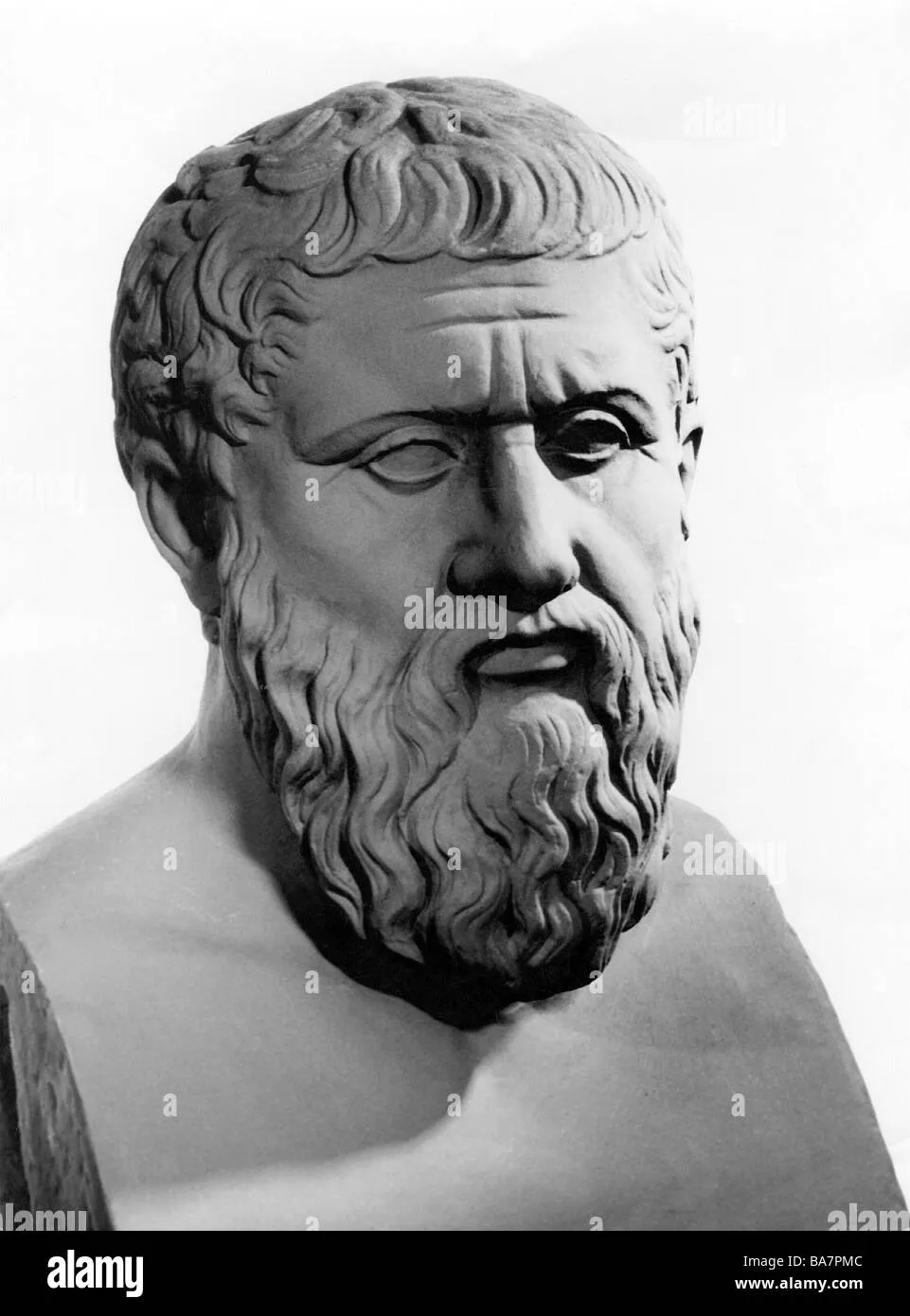 Photo: Plato, via c8.alamy.com
Roman courts became the next major venue. Roman advocates like Cicero were sophisticated enough to understand exactly what the Sophists had been doing and chose to use the tools anyway, while writing extensively about the ethics of doing so. Cicero's rhetorical works are, in large part, a manual for the techniques he publicly criticized — which tells you something about how seriously he took the criticism.
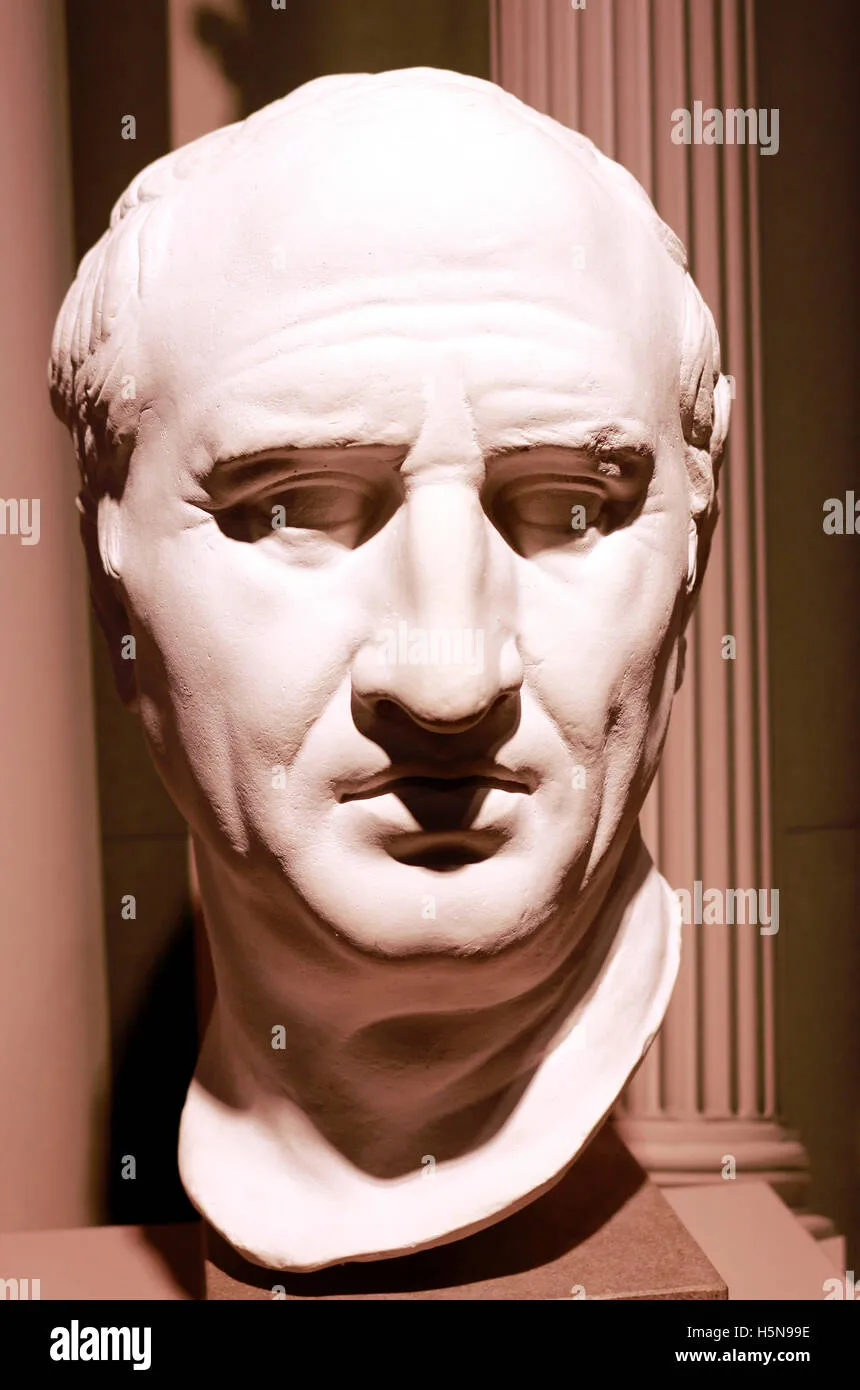 Photo: Cicero, via c8.alamy.com
The Renaissance brought the toolkit back through recovered classical texts, this time applied to political pamphlets and religious controversy. The Reformation-era pamphlet wars — which predated social media by about five hundred years — featured witness flooding, definitional warfare, and speaker discrediting deployed at a scale that would have impressed Protagoras. Both sides. Simultaneously. About questions of ultimate cosmic truth.
By the time newspapers existed, the toolkit was so embedded in public discourse that most practitioners didn't know they were using it. They thought they were just arguing.
The Part You Were Hoping Wouldn't Be Here
Here's the uncomfortable part: Plato's critique of the Sophists is the same critique we level at misinformation today, and Plato lost.
Not because he was wrong. His argument — that rhetoric divorced from truth is dangerous and ultimately corrodes public decision-making — is demonstrably correct. Athens made a series of catastrophically bad decisions in the late fifth century BC, many of them driven by sophisticated rhetorical manipulation in the assembly, and those decisions contributed to the city's decline as a major power.
Plato lost because the Sophists were solving a real problem for real people. Citizens needed to be persuasive. Lawyers needed to win cases. Politicians needed votes. The toolkit worked. It still works. That's why it's still here.
The historical record on this is consistent enough to be depressing: societies that have tried to solve the misinformation problem through restriction — controlling who can speak, what can be published, which arguments are permissible — have generally made things worse, because the restriction tools get captured by whoever is most motivated to use them, which is usually the people most invested in a particular version of events.
Societies that have done somewhat better are the ones that invested in widespread literacy in how the toolkit works — not fact-checking as an institution, but rhetorical education as a civic skill. Recognizing witness flooding when it's happening. Noticing when a factual question is being reframed as a matter of perspective. Catching definitional warfare before the vocabulary shift has already happened.
The Sophists invented the problem. Plato diagnosed it. Neither of them solved it.
We haven't either. But at least now you know what you're looking at.