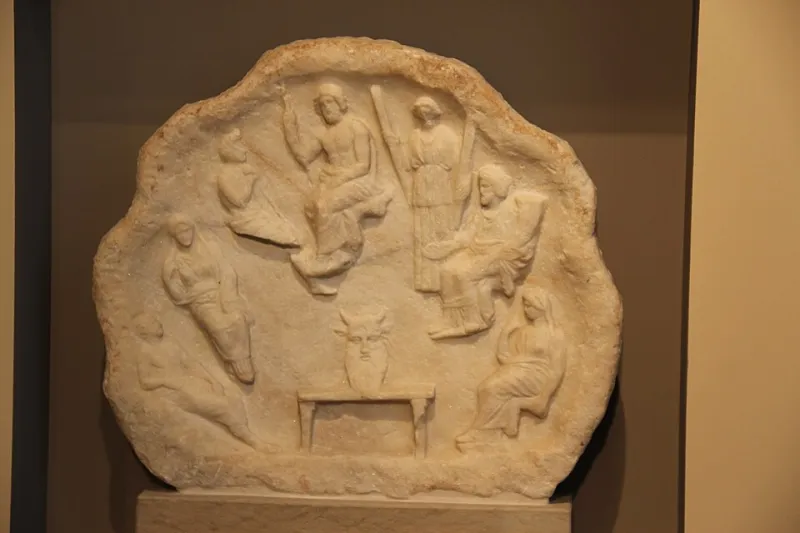
The Network Effect Was Invented in Rome: How Ancient Letters of Introduction Built the First Professional Social Platform

Your Roman LinkedIn Profile
Imagine trying to land a job in ancient Rome. No Indeed.com, no recruitment agencies, no HR departments. Just you, your skills, and—if you were smart—a carefully cultivated network of people willing to write letters on your behalf.
Welcome to the world's first professional social platform: the Roman letter of introduction.
For over 500 years, ambitious Romans used handwritten recommendations to open doors across the empire. These weren't casual notes between friends. They were sophisticated pieces of social engineering that could make or break careers, and the psychology behind them is identical to every networking strategy used today.
The only difference? When your professional reputation traveled by horseback instead of fiber optic cable, every introduction had to count.
How Roman Networking Actually Worked
The Roman system was built around a concept called commendatio—formal letters of introduction that vouched for someone's character, abilities, and trustworthiness. If you wanted to do business in Alexandria, serve in the provincial government, or even just travel safely through unfamiliar territory, you needed the right letters from the right people.
These weren't generic recommendations. Roman letters of introduction were highly specific documents that served multiple functions: they verified your identity, vouched for your competence, and—most importantly—transferred the letter-writer's reputation to you.
When Cicero wrote to his friend Atticus introducing a young lawyer named Marcus, he wasn't just making a casual suggestion. He was putting his own social capital on the line. If Marcus turned out to be incompetent or dishonest, it reflected poorly on Cicero's judgment.
 Photo: Cicero, via as1.ftcdn.net
This created a self-regulating system where people were careful about whom they recommended—exactly like modern professional networking, where your LinkedIn endorsements say as much about you as they do about the person you're endorsing.
The Social Currency of Ancient Rome
What made Roman letters of introduction so powerful was the empire's rigid social hierarchy. In a world where your family background determined most of your life opportunities, letters from well-connected patrons could catapult you into circles that would otherwise remain closed.
But here's the fascinating part: the letter-writing system actually created opportunities for social mobility that the formal class structure didn't allow. A talented freedman with the right recommendations could access business opportunities that might be denied to a freeborn citizen with the wrong connections.
Pliny the Younger, one of Rome's most prolific letter writers, regularly used his correspondence to advance the careers of promising young men from modest backgrounds. His letters survive today, and they read like LinkedIn recommendations written by a master networker:
 Photo: Pliny the Younger, via cdn.britannica.com
"Suetonius Tranquillus is a man of the highest integrity, the most refined literary taste, and exceptional diligence in all his undertakings. I have observed his character closely and can recommend him without reservation for any position requiring discretion and scholarship."
Sound familiar? Change "Suetonius Tranquillus" to "John Smith" and "literary taste" to "technical skills," and you've got a modern professional recommendation.
When Recommendations Go Public
One of the most interesting aspects of Roman letter-writing culture was how often these private recommendations became public knowledge. Recipients frequently shared letters of introduction with others, both to demonstrate their own connections and to provide social proof of the recommended person's worthiness.
This created an early version of what we now call "social proof"—the psychological phenomenon where people assume someone is competent or trustworthy based on others' public endorsements of them.
Roman businessmen would sometimes carry collections of letters from various prominent citizens, essentially creating portable portfolios of professional recommendations. When negotiating deals or seeking new opportunities, they could produce testimonials from senators, governors, or successful merchants as evidence of their reliability.
This practice was so common that it spawned an entire genre of fraudulent letters. Unscrupulous people would forge recommendations from famous Romans, betting that recipients wouldn't be able to verify authenticity across the empire's vast distances.
The Romans even developed ways to authenticate letters—special seals, particular writing styles, coded phrases that only the real author would know. They were basically creating the ancient equivalent of verified accounts on social media.
Renaissance Networking Gets Systematic
Jump forward a thousand years to Renaissance Italy, and you'll find that merchant families had turned letter-writing into a science. The Medici bank, which operated across Europe, maintained correspondence networks that would make modern multinational corporations jealous.
Francesco Datini, a 14th-century merchant, left behind over 150,000 letters that reveal how professional networking operated in medieval Europe. His correspondence shows a sophisticated understanding of relationship management, reputation building, and strategic introduction-making that wouldn't look out of place in a modern business school textbook.
Datini's letters reveal that he spent as much time cultivating relationships as he did managing his actual business operations. He regularly wrote letters introducing business partners to each other, vouching for the creditworthiness of clients, and maintaining connections with influential people across Europe.
The Renaissance also saw the development of what we'd now call "networking events"—formal gatherings where merchants, scholars, and nobles could meet and exchange introductions. These weren't casual social occasions; they were carefully orchestrated opportunities for relationship building.
Early America's Network State
When European colonists arrived in North America, they brought letter-writing culture with them. But the frontier environment created new challenges for professional networking. In a world where your nearest neighbor might be miles away and communication with Europe took months, letters of introduction became even more crucial.
Benjamin Franklin, arguably America's first great networker, understood this perfectly. His correspondence reveals a man who treated letter-writing as a strategic tool for building influence and advancing both his own career and the careers of people he supported.
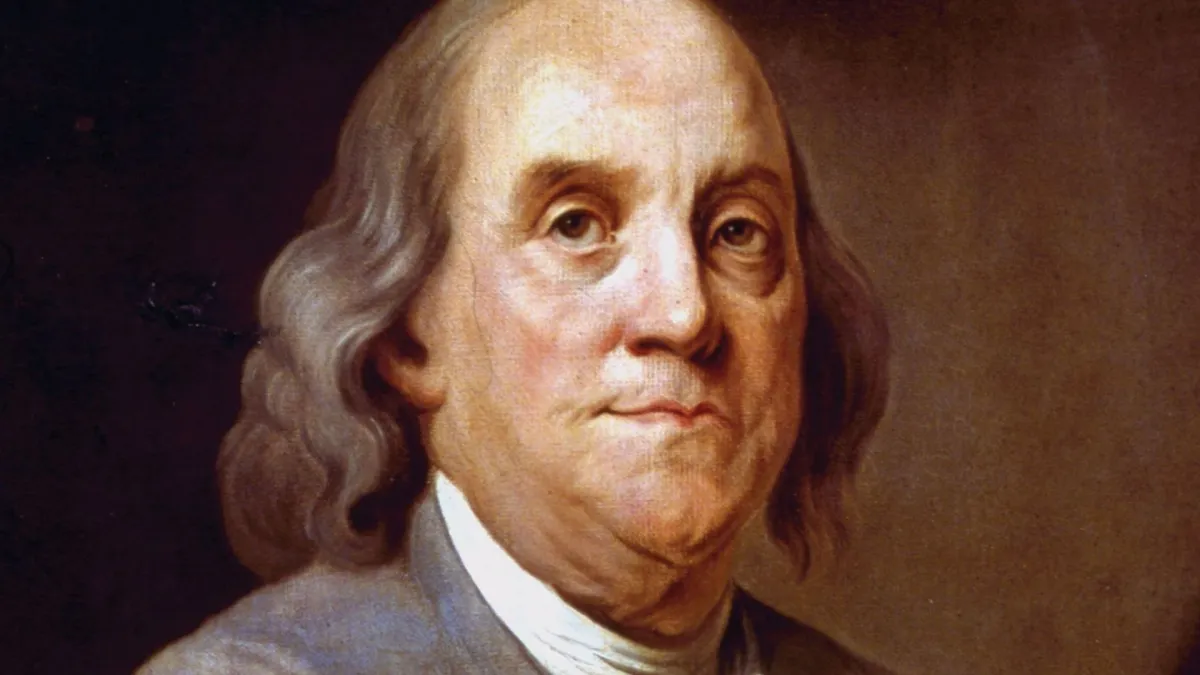 Photo: Benjamin Franklin, via cdn.britannica.com
Franklin's letters of introduction followed the Roman model: they were specific, they put his reputation on the line, and they served multiple audiences. When he wrote to introduce someone to a potential business partner, he knew the letter might be shared with others, so he crafted his language to serve both immediate and long-term networking goals.
The early American postal system was essentially the internet of its day—a network that allowed people to maintain professional relationships across vast distances and build influence through strategic communication.
What LinkedIn Learned from Cicero
Fast-forward to today, and every feature of modern professional networking has roots in ancient letter-writing culture. LinkedIn endorsements work exactly like Roman commendatio: they transfer reputation from the endorser to the endorsed person. Professional networking events serve the same function as Renaissance merchant gatherings. Even the language we use—"vouching for" someone, "making introductions," "building relationships"—comes directly from centuries of letter-writing tradition.
The only thing that's changed is speed and scale. Where Roman letters took weeks to travel across the empire, LinkedIn messages arrive instantly anywhere in the world. Where Renaissance merchants might maintain correspondence with dozens of business contacts, modern professionals can network with thousands.
But the fundamental psychology remains identical. People still want others to vouch for their competence. They still use mutual connections to gain access to new opportunities. They still worry about their professional reputation and carefully manage how they present themselves to different audiences.
The Uncomfortable Truth About Professional Performance
Studying the history of professional networking reveals an uncomfortable truth: most career advancement has always been about who you know, not just what you know. The Romans understood this. Renaissance merchants built entire business strategies around it. Early American entrepreneurs used it to create new opportunities in an uncertain environment.
Modern professionals like to think that LinkedIn and other networking platforms have democratized career advancement by making it easier to connect with influential people. But the evidence suggests that digital networking has simply made existing social dynamics more visible and efficient.
The same people who were good at networking in the Roman world—those who understood how to build relationships, manage their reputation, and provide value to others—are the ones who succeed on LinkedIn today.
Why This History Matters
Understanding the deep history of professional networking matters because it reveals that the social dynamics we experience today aren't products of modern technology—they're fundamental aspects of how humans organize economic activity.
Every frustration you've felt about professional networking—the sense that success depends too much on connections, the pressure to constantly manage your reputation, the difficulty of breaking into established networks—has been experienced by ambitious people for thousands of years.
But the history also reveals opportunities. The Romans, Renaissance merchants, and early American entrepreneurs who succeeded at networking understood that it wasn't just about asking for favors—it was about creating value for others, building genuine relationships, and maintaining their reputation over time.
Those lessons are just as relevant today as they were 2,000 years ago. The tools change, but the psychology stays exactly the same.
Because whether you're carrying letters of introduction across the Roman Empire or managing your LinkedIn profile in Silicon Valley, you're participating in the same fundamental human activity: using social relationships to create economic opportunities.
The network effect wasn't invented by tech companies. It was perfected by people who understood that in a world where reputation travels, every introduction is an investment in your professional future.