Forty Days of Fear: How Venice Invented Quarantine When Nobody Knew What Germs Were
The Ships That Couldn't Come Home
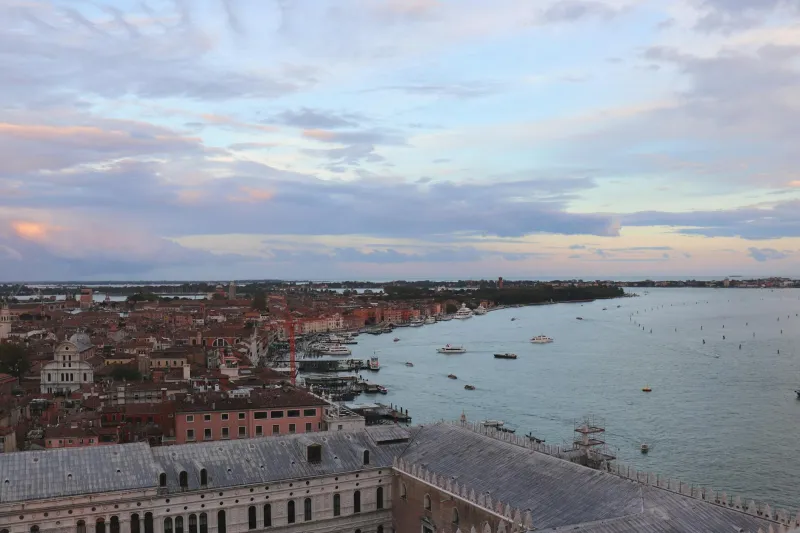
Picture this: you're a Venetian spice merchant in 1377. Your ships are returning from Constantinople loaded with silk, pepper, and profit. But they're also carrying something else — rumors of a mysterious disease that kills within days.
The city council has a choice. Let the ships dock and risk catastrophe, or keep them anchored offshore indefinitely and watch the economy collapse. They chose a third option that would define public health policy for the next 600 years: the quarantine.
Here's the thing nobody wants to admit: they had no idea if it would work. Germ theory wouldn't be invented for another 500 years. The concept of infectious disease was barely understood. But fear doesn't wait for science, and politicians can't say "we don't know" when people are dying.
When Fear Writes Policy
The word "quarantine" comes from the Italian "quaranta giorni" — forty days. Why forty? Not because Venetian doctors had calculated optimal incubation periods. Because forty was a biblical number. Moses spent forty days on Mount Sinai. Jesus fasted for forty days in the desert. Noah's flood lasted forty days.
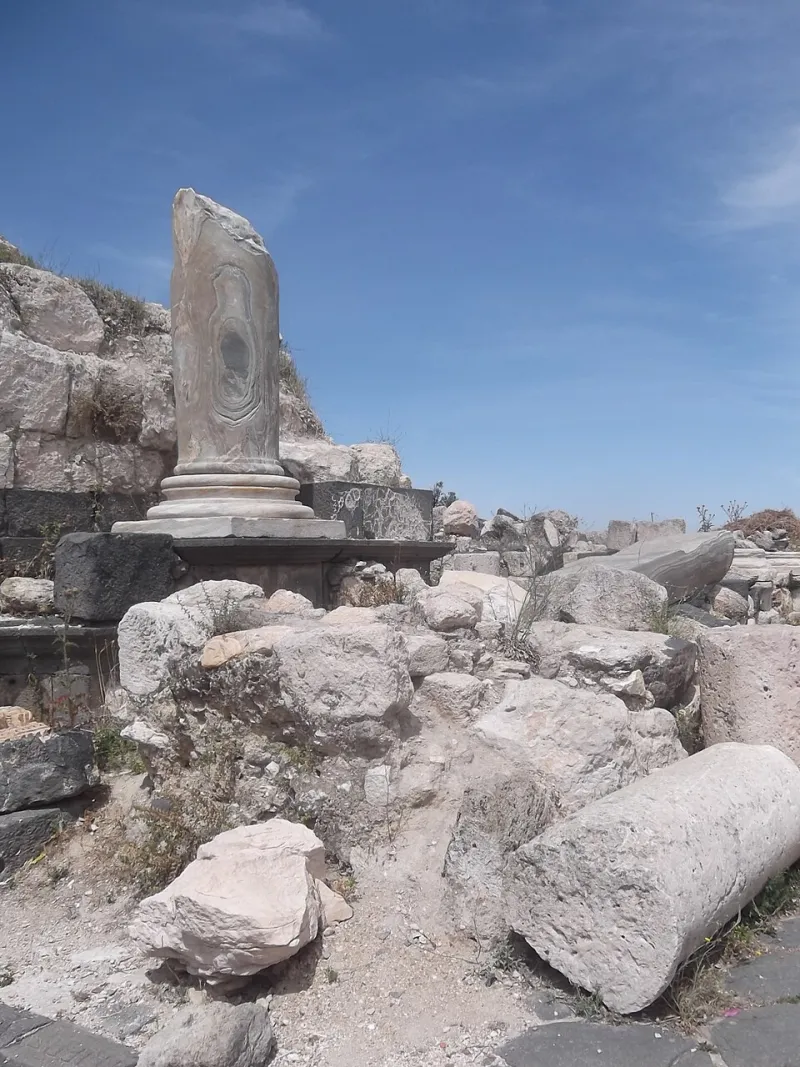
 Photo: Mount Sinai, via www.pixsavor.com
When you don't understand the science, you fall back on what feels right. Forty days felt significant enough to matter but not so long as to completely destroy trade. It was policy by gut feeling, dressed up in religious authority.
Sound familiar? In March 2020, American officials announced "fifteen days to slow the spread" — not because epidemiologists had calculated that fifteen days was optimal, but because it was long enough to seem serious and short enough to seem tolerable. When that didn't work, they tried thirty days. The numbers were political compromises, not scientific conclusions.
The Merchant's Revolt
Venetian traders hated the quarantine system from day one. Forty days of storage costs, spoiled goods, and lost opportunities could bankrupt a merchant family. They lobbied furiously for exceptions, exemptions, and shorter waiting periods.
The arguments sound exactly like what we heard during COVID lockdowns. Economic damage versus public safety. Individual liberty versus collective responsibility. The certainty of financial loss versus the possibility of disease transmission.
Merchants argued that healthy crews shouldn't be punished for the mere possibility of infection. They pointed out that quarantine was destroying international trade relationships. They noted that other cities weren't being as strict, giving competitors unfair advantages.
City officials responded with the same logic we heard in 2020: better safe than sorry. The economic damage was visible and immediate, but the disease damage was invisible and theoretical. When you can't quantify risk precisely, you err on the side of caution.
The Science That Wasn't There
Here's what makes the medieval quarantine system remarkable: it worked, even though the reasoning behind it was completely wrong.
Venetians thought disease spread through "miasma" — bad air that carried corruption. They believed that certain winds could bring plague, that rotting matter generated illness, and that moral corruption could manifest as physical disease. None of this was accurate, but the practical result — keeping potentially infected people isolated — achieved the desired outcome.
Modern public health officials faced a similar challenge in early 2020. They knew COVID-19 was spreading, but they didn't know exactly how. Was it airborne? Surface transmission? Droplets? The initial guidance kept changing because the science kept evolving.
But just like in medieval Venice, the absence of perfect information didn't eliminate the need for immediate decisions. Politicians had to act on incomplete data, knowing that both action and inaction carried enormous risks.
The Economics of Uncertainty
Venice's quarantine system created what economists call "deadweight loss" — economic value that disappeared entirely rather than just moving from one group to another. Ships sat idle. Goods spoiled. Workers went unpaid. The entire Mediterranean trading network slowed down.
But Venice also maintained its position as Europe's dominant trading power for another 400 years. Other cities that didn't implement quarantine systems faced periodic population collapses that were far more damaging than temporary trade disruptions.
The lesson isn't that quarantine was good or bad — it's that the decision was fundamentally about risk management, not scientific certainty. Medieval Venetians and modern Americans faced the same impossible choice: accept certain economic damage to prevent uncertain health catastrophe.
The Political Genius of Forty Days
Venice's quarantine system succeeded partly because it felt fair. Rich merchants and poor sailors faced the same waiting period. Foreign ships and Venetian vessels followed the same rules. The policy applied universally, which made it politically sustainable even when it was economically painful.
This universality was crucial for compliance. If wealthy merchants could buy their way out of quarantine, the entire system would have collapsed. If Venetian ships got preferential treatment, foreign traders would have taken their business elsewhere.
Modern lockdown policies succeeded or failed based on similar perceptions of fairness. When political leaders imposed restrictions on small businesses while exempting large corporations, public support eroded. When rules applied differently to different groups, compliance became voluntary.
The Uncomfortable Truth
Here's what Venice's experience teaches us about pandemic response: the debate was never really about the disease. It was about who bears the cost of uncertainty.
Merchants wanted to externalize the risk — let ships dock immediately and hope for the best. City officials wanted to internalize the precaution — better to lose money than lose lives. Neither position was obviously correct, because nobody had enough information to calculate the trade-offs precisely.
The same dynamic played out in 2020. Restaurant owners wanted to externalize the risk of indoor dining. Public health officials wanted to internalize the precaution of closure. Both sides had legitimate concerns, but neither had perfect information.
Venice's quarantine system lasted until the 1800s — not because it was scientifically perfect, but because it provided a framework for managing collective uncertainty. When nobody knows what will happen, the question isn't what's right or wrong. It's who decides, and how those decisions get made.
Four hundred years from now, historians will probably look back at 2020 the same way we look at 1377: a moment when fear and uncertainty forced imperfect people to make irreversible decisions based on incomplete information. The technology was different, but the human psychology was identical.