Golden Handcuffs Were Forged in Ancient Egypt: How Pharaohs Perfected Talent Lock-In 4,000 Years Before Silicon Valley
Every time you hear about another tech worker complaining about golden handcuffs — those stock options and benefits that make leaving too expensive — remember that some Egyptian scribe complained about the exact same thing 4,000 years ago. The pharaohs didn't just build the pyramids; they built the first comprehensive talent retention system that modern HR departments are still copying.
 Photo: Silicon Valley, via livefromsiliconvalley.com
The psychology of keeping your best people from walking out the door hasn't changed since humans started specializing in valuable skills. What's changed is that we pretend it's new.
The Scribal Class: Ancient Egypt's Knowledge Workers
In ancient Egypt, scribes weren't just clerks — they were the knowledge economy. They could read hieroglyphs, handle complex mathematics, manage supply chains for massive construction projects, and navigate the bureaucratic machinery that kept the kingdom running. Sound familiar? They were basically the software engineers of their time.
The pharaohs faced the same problem every modern CEO loses sleep over: how do you keep irreplaceable talent from taking their skills to your competitors? Other kingdoms were always looking to poach Egyptian expertise, just like how every tech company today is trying to raid their competitors' engineering teams.
The Egyptian solution was elegant and ruthless. First, they made scribes into a hereditary class. Your father was a scribe? Congratulations, you're going to scribe school whether you like it or not. This wasn't just tradition — it was economic engineering. By making scribal knowledge run in families, they created built-in loyalty and made it harder for talented individuals to imagine life outside the system.
But hereditary obligation was just the foundation. The real genius was in the benefits package.
Ancient Egypt's Benefits Package Beat Your 401(k)
Egyptian scribes received what we'd recognize today as comprehensive compensation: guaranteed food rations, housing allowances, land grants, and most importantly, social status that money couldn't buy elsewhere. They were exempt from manual labor and military service — basically ancient Egypt's version of not having to do on-call rotations.
The psychological hook was deeper than material benefits. Scribes were given access to sacred knowledge and religious rituals that weren't available to regular citizens. They weren't just employees; they were initiated into an exclusive club. This is the same psychological mechanism that makes modern workers stay at companies with "unique culture" long after the salary stops being competitive.
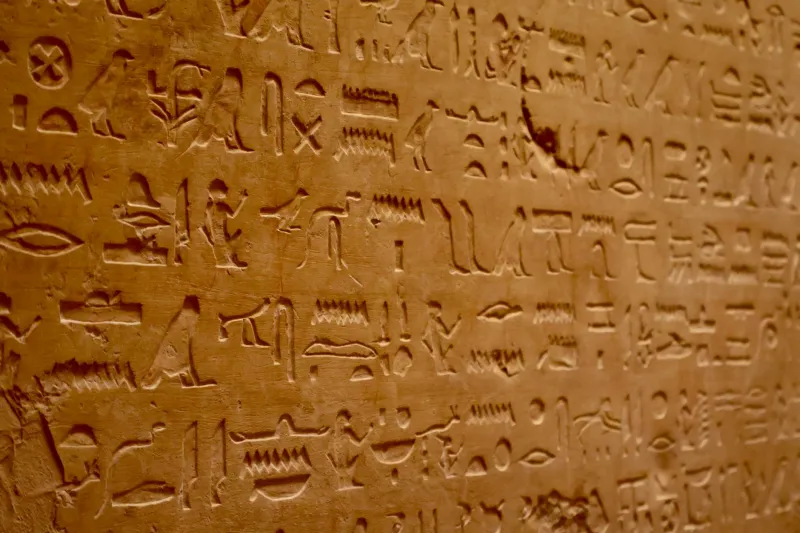
More importantly, the knowledge itself became a trap. Egyptian hieroglyphic writing was deliberately complex and exclusive. Unlike alphabetic systems that anyone could learn, hieroglyphs required years of specialized training that was only available within the official scribal schools. Once you'd invested that time, your skills weren't transferable to other civilizations using different writing systems.
It's the ancient equivalent of learning a proprietary programming language that only works at one company.
The Debt Bondage Innovation
The pharaohs didn't stop at exclusive knowledge. They pioneered what we'd now call "education debt bondage." Scribal training was expensive and lengthy — often taking a decade or more. The state covered these costs, but graduates were expected to work for the government long enough to pay back their education through service.
This created a psychological trap that's eerily familiar to anyone who's ever had student loans. You can't afford to leave because you haven't finished paying for the training that got you the job in the first place. The pharaohs understood that financial obligation creates emotional loyalty in ways that pure salary never could.
They also offered advancement opportunities that were impossible to find elsewhere. The Egyptian bureaucracy had clear promotion tracks, and the most successful scribes could eventually become governors, generals, or even advisors to the pharaoh himself. But these advancement opportunities were only available to people who stayed within the system.
Why the Egyptian Model Still Works
Modern companies use the exact same psychological architecture, just with different terminology. Stock options that vest over four years? That's debt bondage with extra steps. "Unique company culture" and exclusive access to cutting-edge projects? That's the sacred knowledge trap. Clear promotion tracks and leadership development programs? Ancient Egypt wrote that playbook.
The reason these tactics work is that human psychology hasn't changed. People need to feel special, they need financial security, and they need a sense of progression toward something better. The pharaohs figured out how to weaponize all three needs simultaneously.
What made the Egyptian system particularly effective was that it didn't feel like imprisonment — it felt like privilege. Scribes genuinely were better off than almost everyone else in society. The golden handcuffs were real gold.
The Modern Lesson: Retention Is About Psychology, Not Just Money
The Egyptian talent retention system worked for over 3,000 years. Dynasties rose and fell, but the scribal class remained stable and loyal. That's not because ancient people were more loyal than modern workers — it's because the pharaohs understood something that many modern companies miss.
Retention isn't just about paying people well. It's about creating a system where leaving feels like losing your identity, not just changing jobs. When your skills, your social status, your financial security, and your career advancement are all tied to one organization, walking away becomes psychologically impossible even when it might be economically rational.
The next time you're trying to understand why someone stays at a job that seems obviously terrible from the outside, or why you can't bring yourself to leave a situation that isn't serving you, remember the Egyptian scribes. They weren't trapped by chains — they were trapped by the same psychological architecture that's still running the modern economy.
The pharaohs knew that the best prison is one where the inmates hold the keys but can't imagine using them.