Strip the Shelves First, Ask Questions Never: The Ancient Psychology of Panic Buying

In March 2020, the United States experienced something that felt unprecedented: a run on toilet paper so severe that major retailers had to institute per-customer purchase limits, and people were genuinely fistfighting in Costco parking lots over twelve-packs. Commentators called it irrational. Economists called it a coordination failure. Social media called it embarrassing.
Historians, if anyone had thought to ask them, could have called it Tuesday.
Scarcity panic is one of the most well-documented behavioral phenomena in the human record. It shows up in cuneiform tablets from Mesopotamia, in Egyptian administrative papyri, in Roman grain dole records, in medieval famine chronicles, and in the diary of a Puritan merchant who watched his Boston neighbors strip the market bare during a drought in 1690. The specific commodity changes. The human behavior underneath it does not.
What Babylon Can Tell You About Your Neighbor's Garage Full of Hand Sanitizer
Around 1200 BC, the Eastern Mediterranean was entering one of the most catastrophic periods in ancient history — a cascading systems failure that historians now call the Bronze Age Collapse. Trade networks dissolved. Harvests failed. Entire palace economies stopped functioning within a generation.
The administrative records that survive from this period — clay tablets from Ugarit, from Hattusa, from various Mycenaean palace sites — show something fascinating in the years before the final collapse. Local grain markets, which had operated on relatively stable exchange for centuries, began showing signs of hoarding behavior. Merchants who normally sold grain were holding it back. Households that could afford extra storage were filling it. Prices spiked. Then they spiked again.
This wasn't stupidity. Each individual actor was behaving rationally given what they could see from their own position. The problem was that everyone seeing the same signal — scarcity on the horizon — made the exact same move simultaneously, which manufactured the scarcity before it fully arrived. The panic created the shortage as much as the shortage created the panic.
Behavioral economists have a name for this now: a self-fulfilling prophecy driven by availability heuristics. When the brain detects that something might become scarce, it treats "might" as "will" and acts accordingly. The ancient Babylonian merchant hoarding grain and the 2020 suburban dad loading his SUV with forty-eight rolls of Charmin are running the exact same cognitive software.
Egypt Built a System Around It — And Still Couldn't Stop It
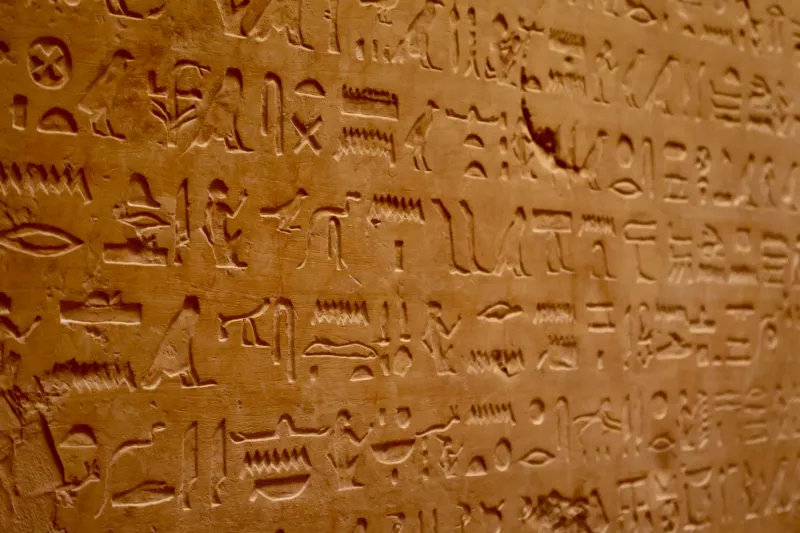
The Egyptians understood scarcity panic well enough to try to engineer around it. The pharaonic grain storage system — those famous silos that show up in biblical stories about Joseph — wasn't just agricultural policy. It was psychological infrastructure. The state controlled enough of the grain supply that it could theoretically smooth out shortage signals before they triggered mass hoarding behavior.
For stretches of Egyptian history, this worked reasonably well. Central storage meant that when a bad harvest hit, the state could release reserves in controlled quantities, preventing the price spike that would otherwise send everyone rushing to buy before prices climbed higher. The signal that triggered panic buying never got loud enough to register.
But the system had a fatal design flaw: it depended entirely on the state being trusted, competent, and not corrupt. When any of those three conditions failed — and in a civilization running for three thousand years, all three failed regularly — the psychological backstop collapsed. During periods of weak central authority, Egyptians did exactly what the Babylonians did. They hoarded. Markets stripped bare. People with storage capacity bought everything they could carry, and people without it starved.
The lesson here isn't that centralized control works. It's that the underlying panic behavior is so powerful that entire civilizations built their economic architecture around trying to suppress it — and still only managed partial success.
Medieval Europe Tried Shame. It Didn't Work Either.
Medieval European authorities had a different approach to hoarding: moral condemnation backed by legal teeth. Canon law explicitly prohibited "engrossing" — buying up supplies specifically to resell at higher prices during scarcity. Local ordinances in English and French towns during famine years would require merchants to sell at fixed prices and prohibited private citizens from purchasing beyond their immediate household needs.
Church sermons hammered the message home. Hoarders were sinners. Profiteers were criminals against the community. The social stigma was real and the legal penalties weren't trivial.
And yet the chronicles from every major medieval famine show the same pattern: within days of a shortage signal reaching a town, markets were stripped. Wealthy households had already filled their larders. Merchants had already moved their stock to private storage. The moral framework collapsed the moment the threat felt real enough.
This maps almost perfectly onto 2020. Americans knew, intellectually, that hoarding toilet paper was irrational and antisocial. Polling from that period showed that most people disapproved of panic buying in the abstract while simultaneously doing it. The gap between stated values and actual behavior under scarcity pressure has been consistent across five millennia. People know hoarding is bad. They do it anyway. The lizard brain is faster than the ethics seminar.
The Signal Problem Nobody Has Solved
Here's what the historical record actually suggests: the trigger for mass panic buying isn't the shortage itself. It's the signal that a shortage might be coming.
In ancient contexts, that signal was usually a bad harvest report, a disrupted trade route, or a rumor spreading through a market. In modern contexts, it's a viral tweet, a news segment, or — critically — the sight of empty shelves, which is itself a product of earlier panic buying. Once the shelves look bare, the signal has been sent and the feedback loop has started. You cannot shame or legislate your way out of it at that point. The cognitive machinery is already running.
What the Egyptians understood, and what modern supply chain managers have slowly rediscovered, is that the intervention has to happen at the signal level, not the behavior level. You don't stop panic buying by telling people not to panic buy. You stop it by controlling what information reaches the market and when — which is its own enormous ethical and logistical problem.
Some modern retailers figured this out accidentally during COVID. Stores that quietly restocked shelves overnight and opened in the morning with full inventory saw less panic buying than stores that visibly struggled to keep up. The absence of the empty-shelf signal disrupted the feedback loop before it could build momentum. Pharaoh's grain silos worked on the same principle.
Five Thousand Years of the Same Bad Morning
The reason this history matters isn't academic. Scarcity events are becoming more frequent — supply chain shocks, climate-driven agricultural disruptions, geopolitical trade disruptions — and the populations experiencing them are larger and more densely connected than anything the ancient world managed. A panic-buying signal that would have stripped one Roman market can now strip a thousand Amazon warehouses simultaneously.
The behavioral psychology hasn't changed. The scale has. And if you want to understand what's going to happen the next time a shortage signal hits a population of 330 million people who all have the same smartphone telling them the same thing at the same time, the most useful data set you have isn't a behavioral economics lab study run on undergraduates in New Haven.
It's the entire recorded history of every civilization that ever faced a bad harvest and watched its people lose their minds in the market square.
The past doesn't repeat itself. But the people in it absolutely do.