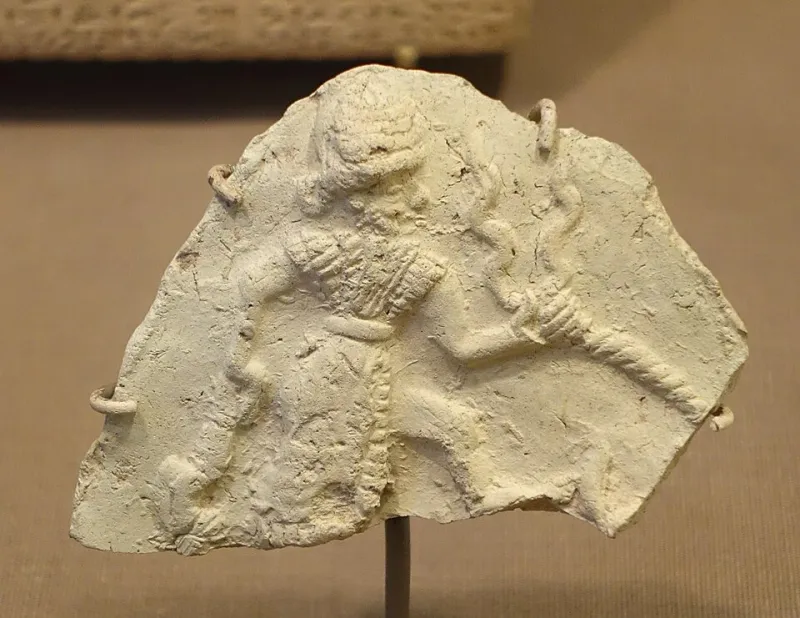
Your Coffee Shop Punch Card Is 3,000 Years Old — And It Never Really Worked

Somewhere in your wallet right now, there's probably a card with some punched holes or a barcode tied to an app that's supposed to make you feel good about buying the same coffee you were going to buy anyway. Maybe you've got airline miles you'll never actually use for the trip you keep planning. Maybe there's a credit card rewards statement sitting in your inbox promising cash back that amounts to roughly the cost of a sandwich.
Congratulations. You are participating in a system that has been failing to do what it claims for approximately three thousand years.
The Temple Economy and Its Frequent-Worshipper Program
Mesopotamian temples weren't just religious institutions. They were the economic engines of their cities — major landowners, employers, lenders, and distributors of goods. And like any institution managing a large workforce and a larger base of dependent suppliers and laborers, they needed ways to maintain loyalty in a world without employment contracts, brand identity, or Yelp reviews.
The solution they landed on was a tiered reward system built around ration allocations and preferential access. Workers and suppliers who maintained consistent relationships with the temple received predictable shares of the temple's output — grain, oil, wool, beer. Senior or long-tenured participants got better rations, access to the temple's credit facilities on favorable terms, and status markers that were visible within the community.
This is, structurally, exactly how a modern tiered loyalty program works. Show up consistently, accumulate points, unlock better rewards, display your status (gold card, platinum medallion, whatever the current terminology is).
And it worked — right up until it didn't. Temple records from Ur and Nippur document a recurring pattern: as ration systems matured, participants became increasingly focused on optimizing their reward extraction rather than on the underlying relationship the rewards were supposed to reinforce. Workers gamed allocation systems. Suppliers learned which minimum thresholds triggered which reward tiers and calibrated their behavior accordingly. The rewards stopped signaling genuine loyalty and started signaling sophisticated gaming.
The temples responded by adding complexity — more tiers, more conditions, more fine print. Which made the gaming more sophisticated. Which prompted more complexity. Sound familiar?
Tang Dynasty China and the Bureaucratic Points System
Chinese imperial administration under the Tang Dynasty (618–907 CE) ran on something that looks remarkably like a modern employee performance and rewards program. Officials accumulated merit through documented service, successful policy outcomes, and — critically — through the patronage networks they built and maintained with senior officials.
The system was designed to align individual incentives with imperial goals: do good work, get promoted, accumulate the tangible rewards of rank (salary, land grants, ceremonial privileges). In theory, this created a self-reinforcing cycle of capable administration.
In practice, it created a self-reinforcing cycle of reward optimization. Officials learned quickly that documented service wasn't the same as effective service, and that patronage relationships were a more reliable path to promotion than policy outcomes. The metrics that the reward system measured — reports filed, ceremonies attended, connections maintained — gradually decoupled from the outcomes the system was supposed to produce.
By the late Tang period, the bureaucratic reward apparatus had become so complex and so thoroughly gamed that it was consuming enormous administrative energy just to maintain itself, while the actual work of governing was increasingly delegated to regional strongmen who operated outside the formal reward structure entirely. The dynasty collapsed in 907 CE, assisted substantially by the failure of its central administrative apparatus.
Medieval Monasteries: The Subscription Model's Ancestor
If the Tang Dynasty represents the corporate loyalty program gone wrong, medieval European monasteries represent the subscription service — and they ran into the same problems modern subscription businesses face, just with more Latin.
Monasteries offered a compelling value proposition to donors: contribute land, labor, or money, and receive ongoing spiritual services — prayers, masses, commemorations — in perpetuity. For a medieval Christian aristocrat worried about the fate of his soul and the souls of his ancestors, this was a genuinely attractive deal. The monastery got resources. The donor got a continuous stream of spiritual benefits.
The problem was churn — not of subscribers leaving, but of the value proposition degrading over time. As monasteries accumulated more donors and more commemorative obligations, the actual prayer time available per donor decreased. Monasteries responded by adding monks, which required more resources, which required more donors, which added more obligations. Several major monastic orders went through cycles of reform specifically because their core spiritual function had been overwhelmed by the administrative demands of managing their loyalty program.
The donors noticed. By the high medieval period, wealthy patrons were increasingly sophisticated about shopping their endowments across institutions, negotiating specific service levels, and hedging their spiritual investments across multiple monasteries. The subscription had become transactional, which was exactly what it was designed to prevent.
The Psychological Truth That Every Version Missed
Here's what's striking about all three of these examples, and about every version of the loyalty program that's come since: they all made the same foundational error.
They confused the signal for the thing being signaled.
A customer who keeps coming back because they genuinely prefer your product is loyal. A customer who keeps coming back because your points system has made switching costs just high enough to overcome their mild preference for a competitor is not loyal — they're trapped. And trapped customers behave very differently from loyal ones. They complain more. They're less forgiving of service failures. They actively resent the system holding them. And the moment a competitor offers a sufficiently attractive switching incentive, they're gone.
Psychologists call the underlying dynamic overjustification effect. When you add an external reward to a behavior someone was already doing for intrinsic reasons, you don't strengthen the behavior — you replace the intrinsic motivation with extrinsic motivation. Now the behavior is contingent on the reward. Remove the reward, or let a competitor offer a better one, and you've lost something you had before you started the program.
The Mesopotamian temple workers who were engaged with the temple community before the formal ration system existed had a relationship. The ones who joined after the system was established had a transaction. The Tang Dynasty officials who entered government out of genuine administrative ambition had goals that aligned with the empire's. The ones who entered to accumulate merit points had goals that aligned with the merit system. The medieval donors who gave to monasteries out of genuine devotion had faith. The ones who gave to optimize their spiritual ROI had a subscription.
What Modern Companies Keep Getting Wrong
American companies spend somewhere north of $50 billion annually on loyalty programs. The research on whether those programs actually build loyalty — as opposed to gaming behavior and temporary retention — is, to put it charitably, mixed. Airlines have spent decades building the most sophisticated tiered loyalty systems in commercial history, and they still compete almost entirely on price when the programs are held constant.
The companies that actually retain customers long-term tend to share a characteristic that has nothing to do with their points systems: they make a product or deliver a service that people genuinely prefer. Apple's customer retention isn't built on the Apple Card's cash-back structure. It's built on the fact that a lot of people actually like using Apple products. Costco's renewal rate — consistently above 90% — is driven by the fact that the membership fee itself signals a value proposition that Costco then delivers on, not by a tiered rewards structure.
The historical record is pretty clear on what works: be worth choosing. The reward program can be a nice supplemental gesture, but the moment it becomes the reason someone stays, you've already lost the thing you were trying to build.
Three thousand years of temple administrators, imperial bureaucrats, and monastic accountants figured this out the hard way. The data's been in the market for a while. It's just not the data most loyalty program vendors want you to buy.