The Bankers Who Wrote Down Every Warning — Then Ignored All of Them
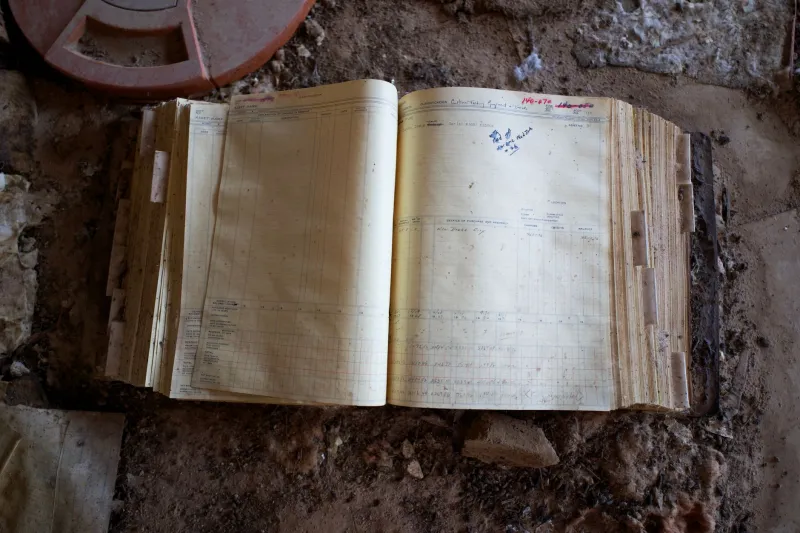
Somewhere in the Florentine state archives, there are letters. Written in the careful merchant hand of the fourteenth century, addressed to the home offices of the Bardi and Peruzzi banking families, they describe in plain language exactly what was about to happen. Overextended credit to the English crown. Positions that couldn't be unwound. Exposure that had grown past any reasonable limit. The branch managers who wrote those letters were not stupid people. They were experienced, they were watching the numbers, and they were worried.
The home offices received the letters. Logged them. Filed them.
And then kept lending.
The Most Sophisticated Financial System in the World
By the early fourteenth century, Florence had developed something that looked, in almost every meaningful way, like a modern banking system. The great merchant families — Bardi, Peruzzi, Acciaiuoli, and later the Medici — operated networks of branch offices across Europe, from London to Bruges to Naples to Avignon. They offered letters of credit, currency exchange, deposit accounts, and complex financing arrangements. They kept double-entry books. They had internal auditors, regular correspondence between branches, and standardized accounting practices that were genuinely sophisticated for their era.
They also had a catastrophic risk management problem, which was that none of their sophistication actually translated into the ability to stop doing things they knew were dangerous.
The Bardi and Peruzzi had extended enormous loans to Edward III of England to finance his campaigns against France — what would become the Hundred Years' War. The scale was staggering. Estimates suggest the Bardi alone had lent the equivalent of several years' worth of English crown revenue. The Peruzzi weren't far behind. Both families had internal documents, correspondence, and ledger entries that made the exposure perfectly legible to anyone who looked.
Edward III defaulted in the 1340s. Both families collapsed. The Florentine banking system went into a crisis that took decades to fully resolve.
Perfect Information, Wrong Decision
The easy explanation is that they didn't know. That explanation is wrong.
Historians who've worked through the surviving records — and there are a lot of them, because Florentine merchants were compulsive documentarians — find clear evidence that both families understood the risk they were carrying. The question isn't whether the information was available. The question is why having the information didn't change the behavior.
This is a pattern that shows up so consistently across financial history that it deserves a name. Call it institutional denial — not the individual psychological phenomenon of refusing to believe bad news, but the organizational version, where information flows correctly through the system and then gets processed in ways that produce the same decision it would have produced if the information hadn't arrived at all.
The Medici bank, which rose to prominence partly on the wreckage of its predecessors and lasted roughly a century longer, replicated almost the same pattern. By the 1470s, the Medici's own internal correspondence documented mounting bad debts, branches operating beyond their sanctioned credit limits, and managers in London and Bruges essentially running independent operations that the Florence office couldn't effectively control. Lorenzo de' Medici received reports. The reports were accurate. The bank continued its trajectory until it collapsed in the 1490s.
Why Information Doesn't Automatically Become Action
Organizational psychologists have spent considerable effort on this question in the context of modern corporate failures — Enron, Lehman Brothers, the 2008 mortgage crisis broadly — and the findings are consistent enough to be depressing. The problem is rarely a lack of data. It's a set of structural and social forces that systematically prevent data from being converted into decisions.
Several of those forces were clearly operating in Renaissance Florence.
First, there's the commitment escalation problem. Once an institution has made a large bet, the psychological and financial cost of acknowledging the bet was wrong often exceeds — in the minds of decision-makers — the cost of doubling down. The Bardi hadn't just lent Edward III money once. They'd lent it repeatedly, over years, each new loan partly justified by the need to protect the previous one. Stopping meant writing down losses that would threaten the family's entire commercial reputation. Continuing meant the possibility, however diminishing, that things would work out.
Second, there's what you might call the messenger problem. The branch managers who sent warning letters were subordinates. Their job was to execute strategy, not set it. Florentine merchant culture had a clear hierarchy, and the people at the top of that hierarchy had both the authority to make decisions and the greatest personal investment in not changing course. Information traveled up the chain. Decisions traveled back down. And the people making decisions were structurally insulated from the ground-level reality the letters were describing.
Third — and this one is underappreciated — there's the social context problem. The Bardi and Peruzzi weren't just banks. They were family institutions embedded in a dense web of political relationships, social obligations, and reputational considerations. Withdrawing from the English crown lending wouldn't just affect their balance sheet. It would affect their relationships with the Florentine political class, their standing in the merchant community, their ability to attract deposits. The financial risk was real, but so were the social costs of the alternative. In that context, continuing made a kind of sense even when the numbers said otherwise.
The Ledger as Theater
There's something almost poignant about the Florentine banking records. These families invented modern accounting in significant part. They were genuinely proud of their record-keeping, and they should have been — the surviving documents are extraordinary artifacts of early commercial sophistication. But the ledgers served multiple purposes simultaneously. They were tools for managing the business, yes. They were also tools for demonstrating the business's credibility to outside observers, for maintaining internal narratives about the institution's soundness, and for creating a paper record that could be pointed to as evidence of responsible management.
This dual function is something every modern organization will recognize. The risk report that gets presented to the board isn't just information. It's also a performance of due diligence. The internal audit that identifies problems doesn't automatically produce action on those problems — it produces documentation that problems were identified, which is a different thing.
What Five Hundred Years of Bank Collapses Actually Teach
The Florentine case isn't unique. It's a template. The same basic story — detailed internal documentation of mounting risk, continued aggressive operation, eventual collapse — appears in the South Sea Bubble, in the railroad speculation of the 1840s, in the savings and loan crisis of the 1980s, in the mortgage market of the 2000s. The details change. The structure doesn't.
The implication isn't that better information systems would have saved these institutions. It's that information systems, however sophisticated, don't solve the human organizational problem of converting accurate data into decisions that contradict the institution's existing commitments and social interests.
The branch managers in London and Bruges were right. The ledgers were right. The warning letters were right.
Being right, it turns out, is not the same thing as being heard.